
Overview
It is a well known fact that majority of children love playing video games! How can we use this passion of gaming into our classroom? Teachers are so hesitant to use games even though it engages students so well as they socialised and work towards goals (Thomas & Brown, 2007). We can include gaming in our schools, and we should as it works on creating a conceptual blend (Thomas & Brown, 2007) production, risk taking, agency, challenges, feedback and so much more (Gee, 2005). Part of gaming can be game creation as well.
Classroom Implementation
One way we can be using gaming creation in schools in through using scratch. As teachers may decide to use scratch to learn coding, scratch can be used again for game creation. Through Scratch, teachers can create a lesson which has targeted objectives and aligns with the classroom programs. This way the students a really effective educational experience with games (Mayer, 2016). Research done by Prensky (2007) shows that game creation is also important and valuable. Students can engage with the content material and this can support their learning experiences.
I created a very basic adventure game using scratch, however there are so many possibilities for students to create games in connection with many different KLA areas. From stories games for literacy to maths games for numeracy, students can have engage. Modules of learning where they focus on the games for a long period of times will allow the to create so many wonderful games and get into the intricacy of creating and coding an educational game.
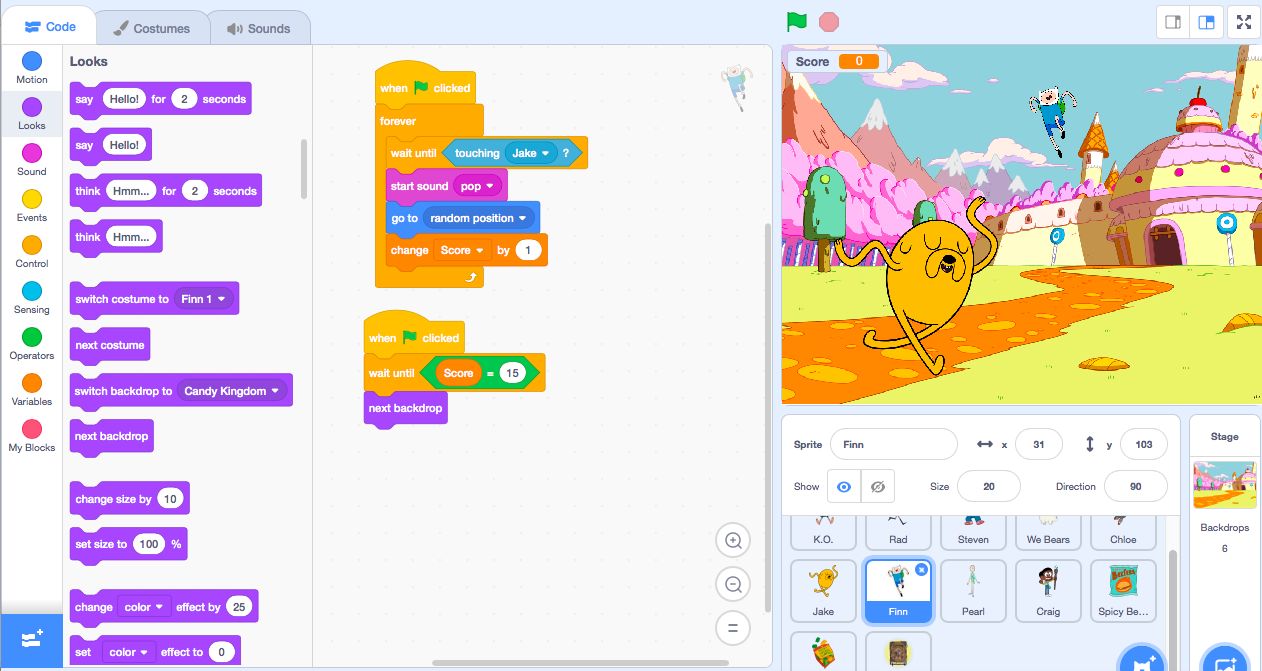
https://scratch.mit.edu/projects/314852873
Creativity
In the nature of this technology is creativity. Students would be creating a game from nothing. Even though their game may need to address certain learning outcomes or content points, there is still an immense possibility for creativity. Students will get to make choices as they work through their module as well as include their own ideas, characters or even sounds into their game. The way they chose to present their game allows for them to make creative choices in their experience.
Referencing
Gee, J. (2005). Good video games and good learning. Phi Kappa Phi Forum, p. 33.
Mayer, R. E. (2016). What Should Be the Role of Computer Games in Education?. Policy Insights from the Behavioral and Brain Sciences, 3(1), 20-26
Thomas, D., & Brown, J. (2009). The Play of Imagination: Extending the Literary Mind. In After Cognitivism: A Reassessment of Cognitive Science and Philosophy (pp. 99-120). Dordrecht: Springer Netherlands
 Asha Beaton
Hi Asha
Great post on the use of games in education
I agree, Scratch is such a wonderful tool to use for game creation, aligned with curriculum objectives. As most students are visual learners, the implementation of gaming into the classroom can change how students learn, and those who think school is boring will think twice.
LikeLike